

Your forecast can be mathematically accurate—and still be wrong for the business.
A launch can outperform its forecast and create supply pressure.
A mature brand can follow its historical trend—until a payer restriction changes access.
A mature brand approaching loss of exclusivity can look stable—until generics enter earlier than expected.
Standard forecasting concepts are mathematically sound, but they were simply not built to absorb and instantly react to complex, non-linear market shocks.
Beyond the Baseline: Forecasting Through Disruption
The core methodologies of forecasting are not inherently flawed, and forecasting teams generally apply these fundamental concepts exceptionally well. The actual issue is that the pharmaceutical ecosystem has evolved into a hyper-dynamic environment. This creates a “broken history” problem. As per Deloitte Center for Health Solutions research, 2023, over one-third of drug launches miss their first-year forecast, and 70% of those products, that early revenue gap never closes. The issue is not a lack of data; it is how the forecast was built and used.
Variables that were once relatively stable—such as payer access algorithms, standard-of-care longevity, and supply chain lead times—are now highly volatile. These events can evolve between forecast cycles and when those changes aren’t reflected until the next update, even a strong model can lag reality.
- A study of 1,700 forecasts for 260 drugs found that actual peak sales diverged from predictions by a median of 71% just one year before launch. Many of these projections are wildly optimistic, with the majority overstating eventual sale by more than 160%. An independent analysis of Austrian reimbursement submissions mirrors this crisis, finding that 55.9% of forecasts qualified as severely inaccurate, either overshooting by more than 100% or undershooting by more than 50%
A pharma forecast can be disrupted by:
Patient Dynamics: The ‘Patient Journey’ Wildcard
History often fails to predict patient persistence once a drug leaves the controlled environment of a clinical trial.
- In chronic therapy forecasting, RWE shows that patients discontinue treatment much faster than trial data suggests. As per DrugPatentWatch analysis, if a clinical trial protocol has an 85% completion rate, but real-world claims data shows a 60% discontinuation rate within six months, the total revenue-per-patient calculation must be revised downward by approximately 25%.
Market Access: When Coverage Decisions Redefine the Target Population
Regulatory approval does not necessarily translate into the forecasted addressable population. In markets where government payers such as Medicare represent a significant share of the target population, coverage decisions can fundamentally reshape the eligible patient pool and reset the commercial opportunity.
- Despite high anticipation and FDA approval, Biogen’s Aduhelm faced a massive commercial disruption when CMS issued a limited coverage decision based on efficacy questions. This led to a 50% price cut and a workforce reduction as the drug failed to reach the addressable population anticipated in pre-launch projections.
Competition: The “Moving Target” Effect
Market share is rarely reshaped gradually; it follows an “erosion curve” dictated by the timing of generic or biosimilar entry.
- For small molecules with thin secondary patent portfolios, branded volume typically collapses by 80% within the first 12 months of multi-source generic availability.
- Standard of Care Shocks: A first-in-class drug, such as a GLP-1 agonist for cardiovascular risk reduction, does not just compete against a category—it establishes one, making standard analog models collapse because no meaningful historical analog exists.
Regulatory Events: The “Patent Thicket” Multiplier
Forecasts are frequently disrupted because teams treat “patent expiry” as a single date rather than a probabilistic range of outcomes.
- According to the study of Initiative for Medicines, Access, and Knowledge (I-MAK), 2022, the average top-selling U.S. drug is protected by approximately 74 granted patents, forming a “thicket”. While a primary patent may expire thus, post-approval patent filings generate an average of 7.7 years of additional effective exclusivity.
- Label Changes: as per the research articles from PubMed and FDA, the addition of a black-box warning to a label can trigger an immediate 40-80% revenue reset, a discontinuous shock that static models fail to capture.
Supply Constraints: Rigid Lead Times in a Hyper-Dynamic Market
A demand forecast is only as good as the physical ability to fulfil it, yet pharma manufacturing lead times are structurally rigid. Sudden fluctuations in political, social, or economic conditions can also reset a supply curve overnight. Thus, miscalculated forecasting demand leads to two devastating extremes:
- Stockouts: These prevent patients from accessing life-saving treatments, directly compromising patient safety and diminishing trust in the entire healthcare system
- Overstocking: Over-forecasting results in significant material losses due to drug expiration, necessitating expensive disposal and emergency procurement processes
- Vial Wastage: IV therapies are often supplied in fixed vial sizes, while patient doses vary by weight, BSA, or regimen. A forecast that accurately predicts patient volumes can still over- or under-estimate the number of vials required when dose-to-vial fit and residual drug are ignored. This creates avoidable wastage, inventory inefficiencies, and distorted supply requirements.
- CMS requires healthcare providers to report the exact amount of “discarded drug” from single-dose vials that are not administered to patients. Government data highlights that for certain high-cost oncology drugs, wastage can account for nearly 10% of total government spend, highlighting a massive gap between the number of vials manufactured and the amount of drug reaching the patient.
Why Traditional Approaches Fall Short: Market Complexity Outpaces Static Models
The foundational models used by organizations are often mathematically sound. The breakdown happens because the speed of market changes outpaces the systems used to track them. In practice, the failure points sit elsewhere.
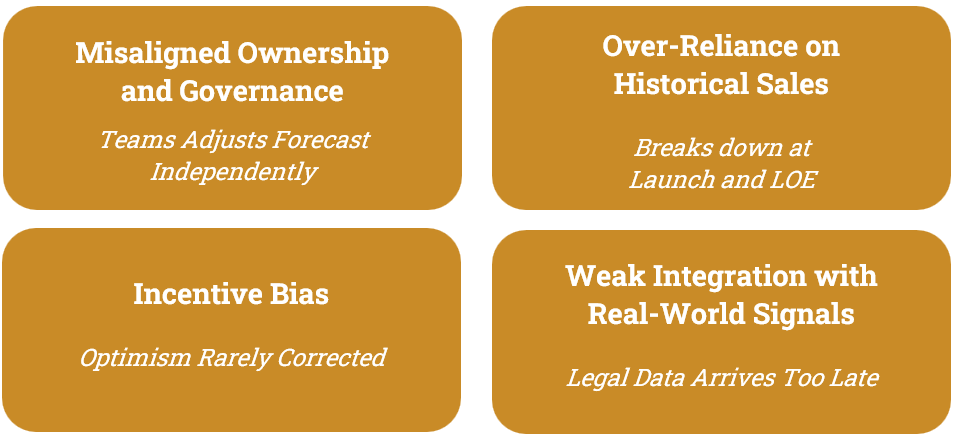
1. Misaligned ownership and governance
Commercial builds the forecast. Supply chain, finance, and market access all use it and all adjust it independently. This creates multiple versions of the truth, untracked overrides.
- Marketing reallocates promotional budget to a new launch and updates their forecast. Supply chain doesn’t see the change until the next planning cycle — and either over- or under-produces as a result.
2. Over-reliance on historical sales
Anchoring to history is a fundamentally sound forecasting concept, but it fails in modern, disruptive scenarios. Though it is fine for stable in-line brands but not useful at launch or brands approaching loss of exclusivity (LOE) as historical sales can’t predict a cliff it’s never seen and becomes a rearview mirror. Many teams still anchor heavily on past sales even when demand is driven by diagnosis rates, line of therapy shifts, or payer access, biosimilar entry, or a major policy change.
3. Incentive bias
When forecasts influence reimbursement submissions or internal sales targets, optimistic bias creeps in. Studies have shown systematic overestimation in such cases. This is rarely corrected at the process level.
4. Weak integration with real-world signals
Prescription data, payer decisions, channel mix, and competitor activity are often tracked but not fully integrated into the forecasting workflow. The result is lagging forecasts that react instead of anticipating.
- One of the most important signals missing from traditional commercial datasets is legal and regulatory intelligence. Orange Book and Purple Book updates, Paragraph IV filings, patent litigation milestones, IRA negotiation timelines, and expected loss-of-exclusivity events can materially affect demand. Yet these signals often remain with legal teams and reach supply chain too late for action.
What Actually Works: A Practical Forecasting Approach
Adopt lifecycle-specific forecasting using hybrid models
There is no universal “best” forecasting algorithm as the forecasting changes as a product moves through its lifecycle. ARIMA may work well for certain stable time series. Regression can be valuable when business drivers are known. Epidemiology and patient-flow models are essential when historical sales are limited, or the patient population drives demand. Machine learning can help identify complex, non-linear relationships. But each method has limitations.
The better question is: What combination of methods best represents the business problem?
That is why a hybrid forecasting approach can be powerful: Different lifecycle. Different signals. Different forecast.
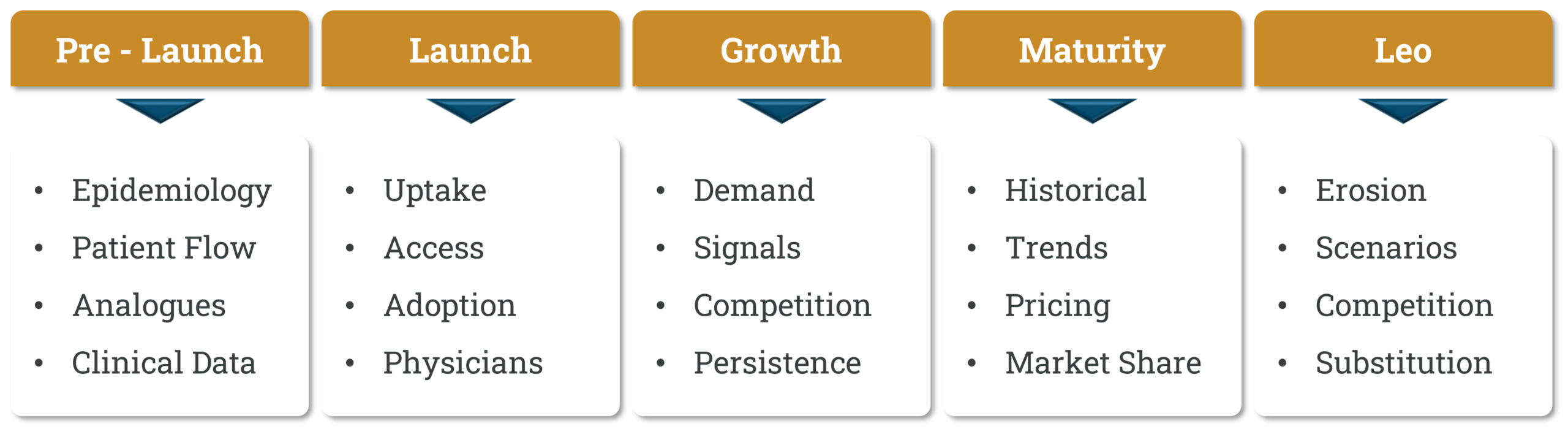
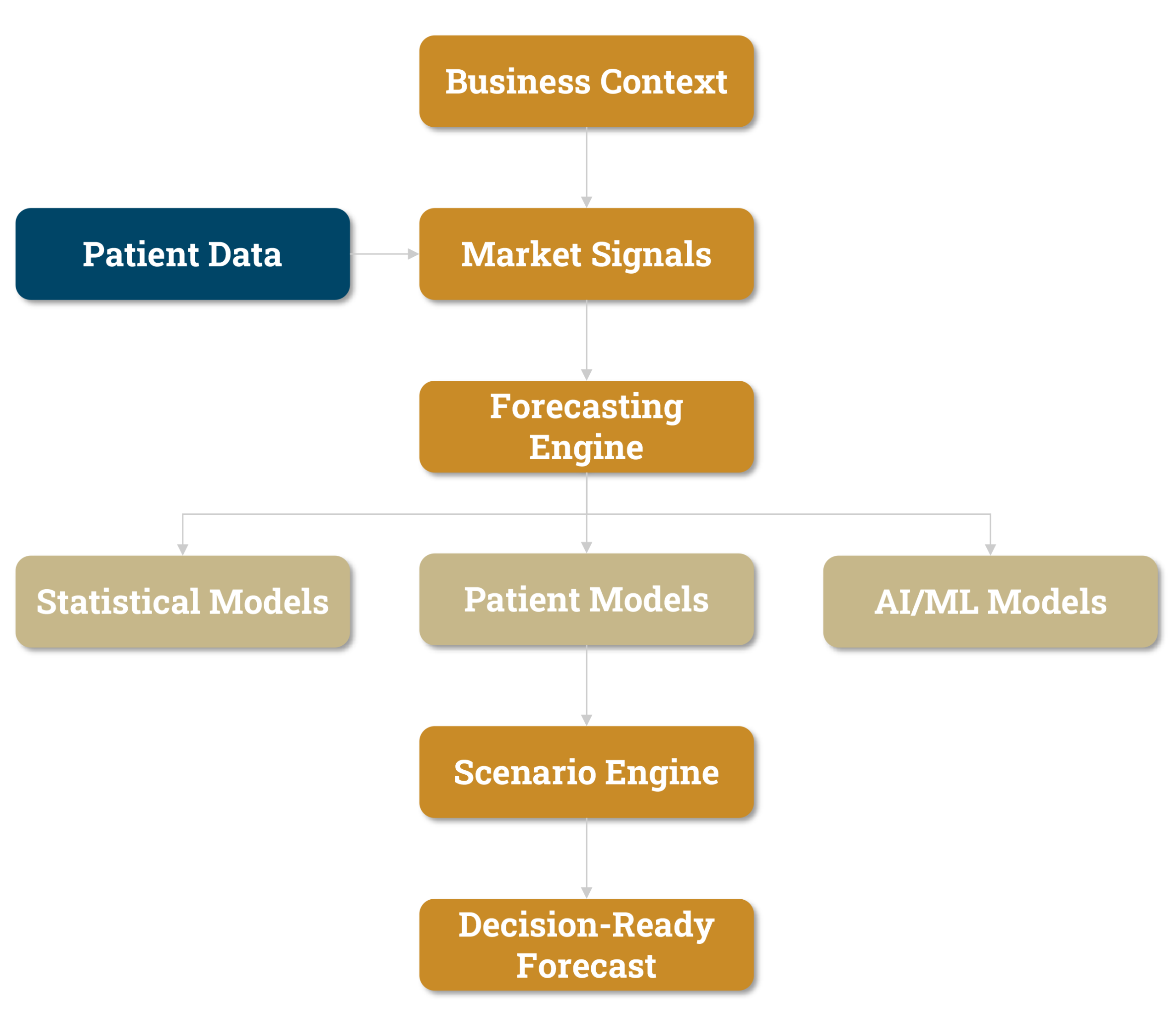
This type of hybrid architecture is more resilient than a single black-box model because it separates stable demand from disruption-driven demand. It also makes the forecast easier to explain. If machine learning is used, explainability tools such as feature contribution analysis can help planners understand which variables are driving the forecast change.
2. Treat forecasting as a decision workflow
Forecasts should not be static outputs. They should be continuously updated decision tools. Organizations moving toward centralized models are seeing better consistency and auditability. The trade-off is potential loss of local nuance, which needs to be managed deliberately.
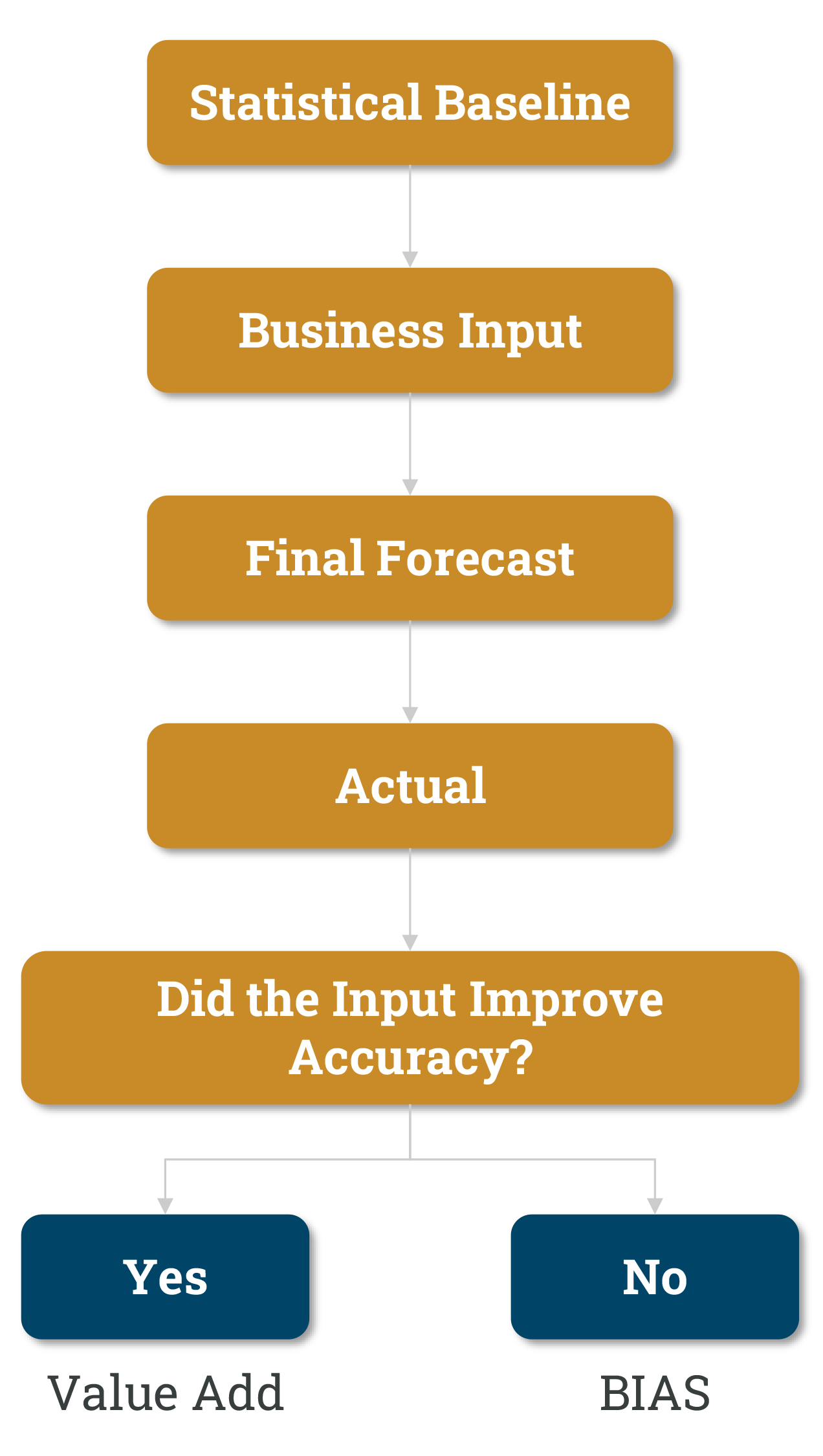
This is where Forecast Value Add can become a core governance metric. Instead of asking whether a planner changed the forecast, organizations should ask whether that change improved the forecast.
Over time, this creates accountability. It also helps identify which interventions are valuable and which are creating forecast whiplash.
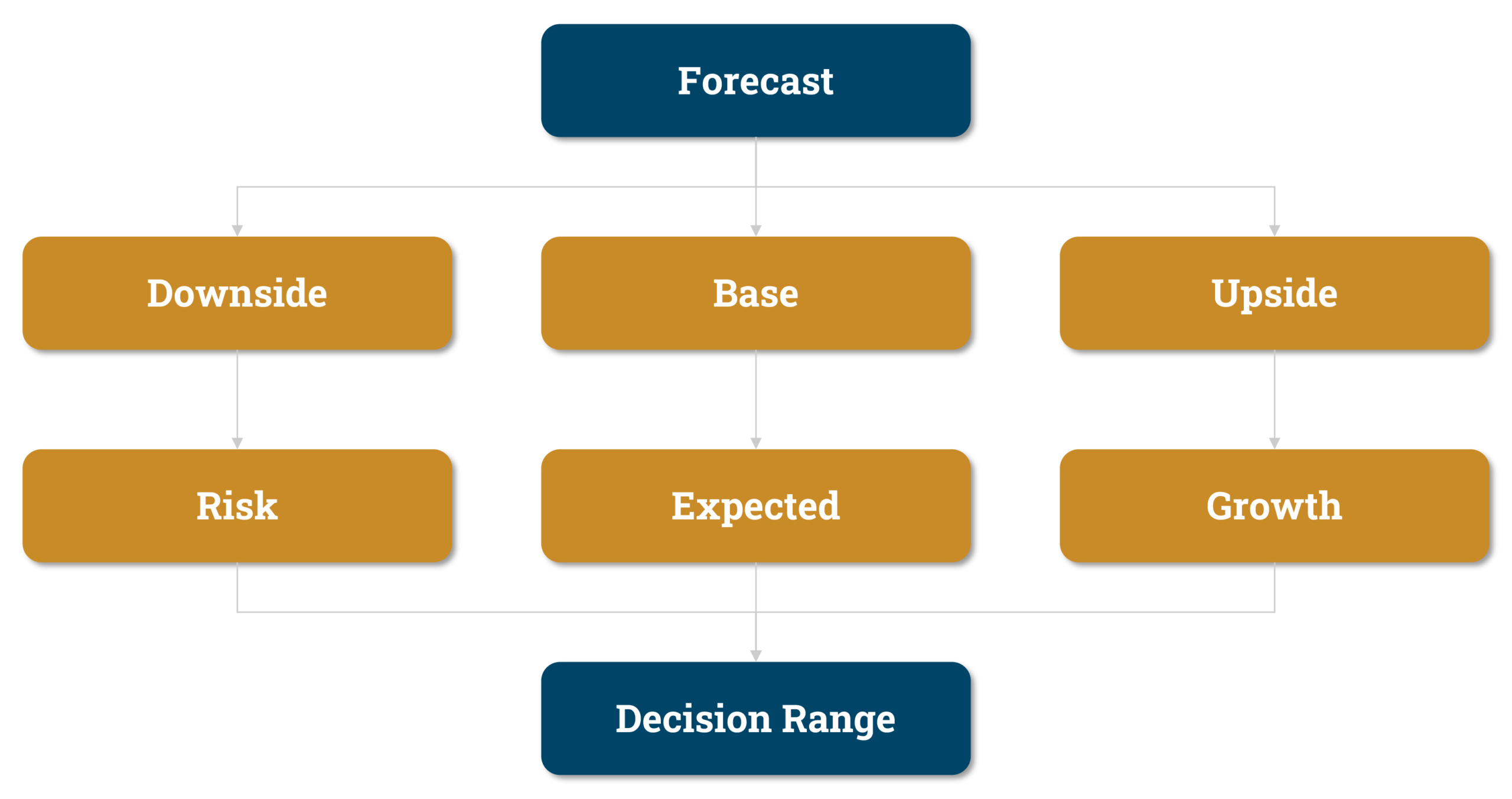
4. Build scenario-driven forecasting, not point estimates
In volatile categories such as oncology, immunology, or GLP-1 therapies, uncertainty is structural. Scenario planning becomes even more important when forecasting around legal, regulatory, or policy-driven events.
- For small molecules, generic entry can trigger rapid volume and revenue erosion because pharmacy substitution can shift demand quickly once AB-rated generics enter the market.
- For biologics, biosimilar adoption may follow a slower slope, but the forecasting challenge is still significant because uptake depends on payer preference, interchangeability, provider behavior, pricing, and contracting strategy.
Loss of exclusivity should be modeled through multiple erosion curves rather than one decline assumption. This means the LOE date should not be treated as a single point estimate. It should be modeled as a probability distribution.
Similarly, policy changes such as government price negotiation can create a new operational horizon. If a product’s future revenue is likely to be affected before the end of its patent life, the forecast must reflect that earlier commercial inflection point.
5. Adoption of AI for scalable solutions
AI and GenAI can make forecasting faster and more scalable but they aren’t a substitute for sound forecasting fundamentals. The real gains today come from augmentation, not replacement.
AI can help:
- Identify patterns
- Detect anomalies
- Automated baseline generation
- Surface external signals
- Validate assumptions
- Faster scenario simulation
- Explain forecast movements
- Make forecasts easier to interrogate
However, without clean and integrated data, AI amplifies errors.
In many organizations, the bigger opportunity is fixing:
- Data fragmentation
- Inconsistent definitions
- Delayed signal integration
The next step is not simply adding more AI. It is expanding the data foundation. Forecasting systems should be able to ingest not only sales, prescription, and inventory data, but also external and forward-looking signals such as:
- Payer coverage updates
- Competitors launch activity
- Epidemiological trends
- Patent filings and litigation events
- Orange Book and Purple Book changes
- Regulatory milestones
- Policy and pricing timelines
A single forecasting engine can then translate these inputs into one aligned planning view across commercial, supply chain, finance, market access, and operations. In this model, forecasting becomes less like a rearview mirror and more like radar. It does not only explain what happened last month. It helps teams detect what could change demand six, twelve, or twenty-four months from now.
Outcome: Reactive to Proactive Planning
Organizations that improve forecasting do not just improve models. They change how decisions are made.
In practice, this leads to:
- Faster forecast cycles
- Better alignment between commercial and supply
- Lower inventory risk
- Stronger launch execution
The gains are incremental but cumulative. A few percentage points in accuracy, combined with faster updates and better coordination, can materially improve financial outcomes.
ForecastIQ: Where Forecasting Meets Decision Intelligence
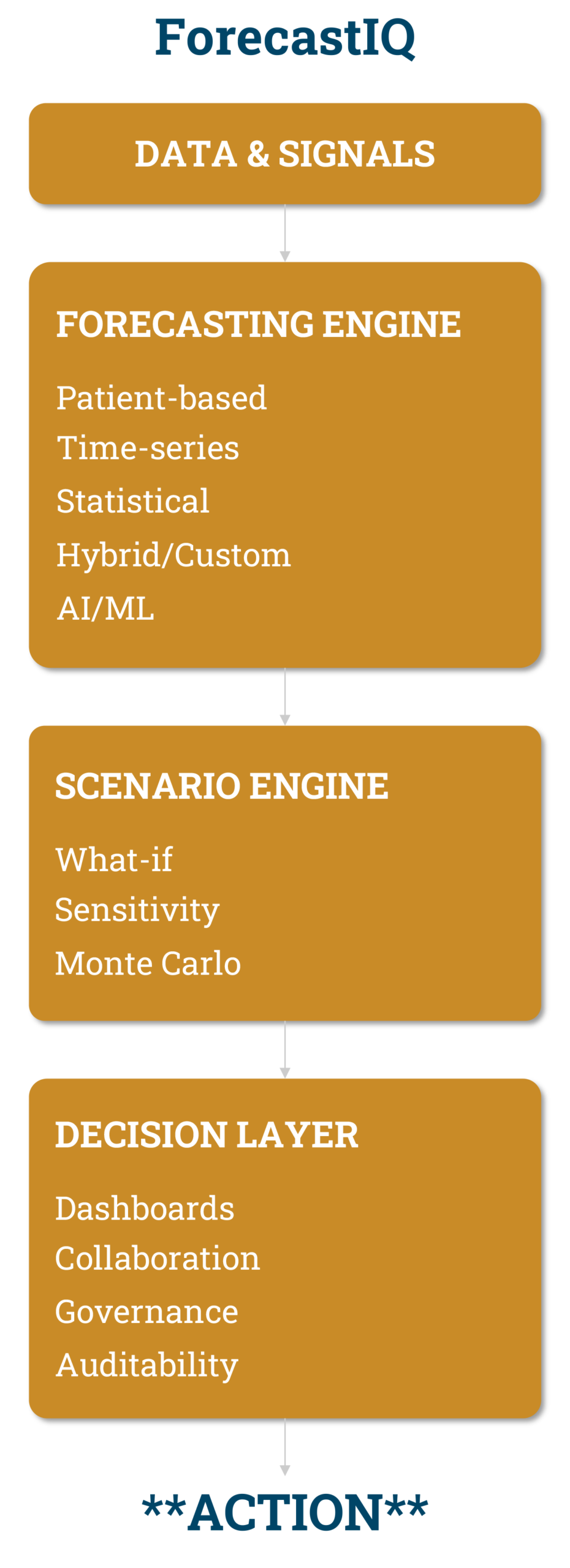
Chryselys’s ForecastIQ is a is a modular, web-based forecasting ecosystem that enables teams to build, enhance, analyze, and govern forecasts across the product lifecycle—while reducing manual effort and accelerating decision-making for the complex pharma nuances. This includes several modules including:
- Forecast Creation Templates: Forecasting teams often work across different therapeutic areas, brands, markets, and stages of the product lifecycle. A flexible forecasting environment therefore needs to support different starting points without compromising standardization.
- Build from Scratch using standardized, customizable templates tailored to different assets, markets, and forecasting needs.
- Integrate with Existing Models and workflows to preserve established methodologies and business logic.
- Load & Iterate on existing models to quickly update assumptions, test scenarios, and refine forecasts without rebuilding from the ground up.
- Core Modules – Advanced Analytics & Governance: Once forecasts are created, the next challenge is turning multiple models and assumptions into a consistent, transparent, and decision-ready view. Core modules provide the analytical and governance layer needed to manage this complexity.
- Consolidation – Aggregate multi-market and multi-brand forecasts while reducing manual reconciliation.
- Scenarios & Sensitivities – Test what-if assumptions and understand their impact in real time.
- Dashboards & Reporting – Standardize KPIs and visualize trends, comparisons, and key forecast drivers.
- Governance & Change Logs – Track versions, assumptions, and changes to improve transparency, traceability, and auditability.
- GenAI Agents – Intelligence Layer: As forecasting environments become more data-rich and complex, GenAI can add an intelligence layer that helps teams move beyond simply producing forecasts toward understanding, interpreting, and acting on them.
- Connect with internal and external data sources to bring relevant information into the forecasting workflow, helping teams incorporate the latest market signals, business inputs, and contextual information alongside quantitative forecast data.
- Generate concise insights, identify key drivers, and support forecast reviews helping users quickly understand the key changes, emerging trends, and assumptions influencing the forecast rather than manually reviewing large volumes of information.
- Enable future capabilities such as automated analogue identification and prompt-based model creation to identify relevant historical or market analogues and potentially create or modify forecasting approaches through natural-language interactions.
ForecastIQ combines forecast creation, advanced analytics, governance, and AI-driven intelligence in a modular ecosystem—allowing clients to adopt the capabilities they need while accelerating forecast cycles and improving transparency, traceability, and decision-making. This helps teams move from static forecasts to dynamic decision systems, reducing risk in launches, improving supply responsiveness, and making forecasting a reliable input into commercial strategy.
The future of pharma forecasting isn’t about choosing between humans, statistics or AI. It’s about bringing them together.
Because the best forecast isn’t simply the one that predicts tomorrow.
It’s the one that helps the business prepare for it.
FAQs
1. What forecasting method is most reliable for a new pharmaceutical launch?
The most reliable approach for a new drug launch is a hybrid model anchored in epidemiology and patient flow, supported by carefully selected analogs and scenario testing. Pure statistical models do not work due to lack of historical data. In practice, teams combine patient population estimates, diagnosis rates, line of therapy assumptions, and payer access scenarios. The key risk is analog bias. Strong teams stress-test analog assumptions and build multiple adoption curves rather than relying on a single forecast.
2. How are pharma companies using AI in demand forecasting without losing explainability?
Pharma companies are using AI mainly to augment forecasting workflows, not replace them. Common applications include machine learning based baseline forecasts, anomaly detection, and rapid sensitivity testing. To maintain explainability, these outputs are layered under transparent business assumptions such as epidemiology, access, and channel dynamics. In practice, AI is used to accelerate updates and improve signal detection, while final forecasts remain interpretable and auditable for cross-functional stakeholders like finance and supply chain.
More advanced teams are also using hybrid AI approaches where one model estimates stable baseline demand and another model captures nonlinear residuals caused by sudden market changes. This keeps the forecast more explainable than a single black-box model and helps planners understand whether a change is being driven by seasonality, policy, epidemiology, access, or competition.
3. Why do pharmaceutical forecasts fail even when data is available?
Pharmaceutical forecasts often fail due to process and governance issues rather than lack of data. Common causes include fragmented data sources, inconsistent assumptions across teams, weak integration of payer and market signals, and incentive-driven bias. In practice, multiple teams adjust forecasts independently, creating misalignment. Even with high-quality data, poor ownership, lack of audit trails, and untracked overrides lead to inaccurate outputs that do not reflect real market dynamics.
4. How should forecasting change across the pharmaceutical product lifecycle?
Forecasting should change significantly across lifecycle stages. Pre-launch forecasts rely on epidemiology, patient funnels, and analogs. Growth-stage forecasts shift toward prescription trends, channel data, and competitive dynamics. At loss of exclusivity, models focus on generic entry, price erosion, and substitution rates. In practice, using a single forecasting approach across all stages leads to errors. High-performing teams explicitly adapt models, inputs, and assumptions based on lifecycle stage.
For mature brands approaching LOE, forecasting should also incorporate patent litigation events, regulatory timelines, biosimilar or generic readiness, payer contracting behavior, and inventory run-down plans. LOE should be modeled as a range of possible outcomes rather than a single fixed date.
5. What causes the biggest financial losses in pharma forecasting?
The largest financial losses typically come from under-forecasting during launches and over-forecasting inventory in mature products. Under-forecasting leads to stockouts, lost prescriptions, and reduced peak revenue due to missed adoption windows. Over-forecasting results in excess inventory, expiry risks, and working capital inefficiencies. In practice, the cost asymmetry is often ignored. Leading organizations explicitly model these risks and prioritize forecast decisions based on business impact rather than accuracy alone.
Another major source of loss is late planning for loss of exclusivity. If legal and regulatory signals are not integrated into demand planning early enough, companies may continue producing against outdated demand assumptions and face avoidable inventory write-offs, margin erosion, or supply misalignment.
6. What is Forecast Value Add in pharma demand forecasting?
Forecast Value Add, or FVA, measures whether a human or process intervention improves the forecast compared with the baseline. In pharma, this is useful because manual overrides are common across commercial, supply, finance, and market teams. FVA helps determine whether those overrides are improving forecast quality or introducing bias and noise.
A strong FVA process tracks the baseline forecast, the override, the reason for the change, and the final outcome. This creates accountability and helps organizations separate useful expert judgment from unnecessary forecast manipulation.
7. Why should legal and patent data be included in pharma demand forecasting?
Legal and patent data can be one of the strongest forward-looking demand signals in pharma. Orange Book listings, Purple Book updates, Paragraph IV filings, patent settlements, and expected LOE timelines can materially change demand expectations years before sales data shows an impact.
Including these signals helps companies prepare for generic or biosimilar entry, production tapering, price erosion, and inventory run-down. Without this integration, supply chain teams may react too late to events that were already visible in legal or regulatory data.
8. Why is accuracy not enough in pharma demand forecasting?
Accuracy is important, but it is not sufficient. A forecast that is accurate on average may still be poor for decision-making if it is slow to update, difficult to explain, unstable between cycles, or disconnected from supply and commercial actions.
Good pharma forecasting should also be transparent, scenario-ready, bias-aware, and operationally useful. The real measure of forecast quality is whether it improves decisions around launch readiness, inventory, supply planning, access strategy, and lifecycle management.